TileShield Roofing
Cranford Tile Roof Replacement

Tile Roof Replacement in Cranford, done right the first time

Tile Roof Replacement in Cranford means matching new tile to a house that may be a century old, and doing it without cracking the neighbors' slate. We work the tree-lined blocks around Cranford Center, Cranford North and Riverside every week, pulling broken tile, replacing failed underlayment and resetting ridge caps on homes near Nomahegan Park and the Cranford Train Station. If your roof is leaking, we find it and fix it.

24/7
Emergency response
800+
Cranford roofs serviced
freeze-thaw leak season
Right now in Cranford

Cranford overview

Tile Roof Replacement in Cranford, built around older homes

Why we work in Cranford

Cranford sits in a freeze-thaw band that punishes tile roofs harder than most of Union County. Water gets into hairline cracks in winter, freezes overnight, and widens them by spring. Add mature trees on nearly every street, and you get gutters packed with leaf litter, backed-up water, and flashing leaks at chimneys and dormers. Homes near the Rahway River also deal with riverfront flooding potential, which drives up humidity under the deck and shortens underlayment life. We work here because the problems are specific and solvable, and because Cranford homeowners tend to maintain their properties rather than defer work. That makes for better jobs and better outcomes.

Clay, concrete and barrel tile roofing for Cranford's older homes

Cranford is one of the few towns in Union County where tile roofs are still the norm rather than the exception. The housing stock around Cranford Center and Cranford West includes a lot of 1900s to 1940s homes with original clay tile, plus 1980s and 1990s builds with concrete tile and Spanish barrel profiles. That mix means a Cranford Tile Roof Replacement is rarely a simple tear-off. We check whether the existing tile can be lifted and relayed, whether the underlayment has failed underneath, and whether the roof deck has softened from decades of trapped moisture. Our crews carry a tile ripper, pry bar, chalk line and tile cutter on every Cranford job, and we run a moisture meter and infrared leak detector before we quote anything. If you are searching for affordable Tile Roof Replacement in Cranford near me, the honest answer is that the cheapest quote is usually the one that skips the underlayment. We do not.
How we work locally

How we run Tile Roof Replacement in Cranford

Challenge: Mature trees drop debris that dams valleys and gutters

Leaf litter and seed pods collect in Cranford roof valleys and behind chimneys, holding water against the underlayment until it works its way inside. By the time a homeowner sees a ceiling stain, the underlayment underneath has usually been wet for months.

Solution: We clear every valley and gutter run as part of any Cranford tile job, then check the underlayment in those areas specifically. If the valley lining has failed, we replace it with ice and water shield before we relay tile. We also tell homeowners which trees are the main offenders so they can keep up with it between visits.

Challenge: Freeze-thaw cycles crack mortar and open ridge caps

Cranford winters swing above and below freezing repeatedly. Water gets into mortar beds at ridge caps and into hairline tile cracks, freezes overnight, and expands. By spring, ridge caps are loose and tile that looked fine in fall is cracked.

Solution: We inspect ridge caps and mortar joints on every Cranford roof we touch, and we mechanically fasten caps where the profile allows instead of relying on mortar alone. For tile with hairline cracks, we replace the individual pieces rather than seal over them, because sealant will not survive another freeze-thaw season.

Where we work

Cranford CenterCranford NorthCranford SouthCranford WestRiversideNomahegan Park area

Where we work

Cranford

Latitude: 40.6565

Extract Directions

Recent projects

Recent project: 1

Cranford Center

Challenge

A 1928 clay tile roof in Cranford Center was leaking at the chimney and along one valley. The homeowner had been told by another contractor that the whole roof needed replacing.

Execution

We inspected with a moisture meter and infrared leak detector and found the tile itself was sound. The failures were the underlayment at the chimney flashing and the valley lining. We lifted tile in those two areas, replaced the underlayment with ice and water shield, installed new copper counter flashing, and relayed the original tile.

Impact

The leak stopped and the homeowner kept the original 1928 tile. The job cost roughly a third of the full replacement quote and took three days instead of two weeks.

Recent project: 2

Cranford South

Challenge

A 1985 concrete tile roof in Cranford South had slipped tile along the ridge and hips after a winter of freeze-thaw, with water staining on the ceiling of an upstairs bedroom.

Execution

The ridge caps had lost their mortar bed and several field tiles had cracked from ice expansion. We removed the damaged tile, replaced the ridge cap mortar with mechanically fastened caps, replaced 34 cracked field tiles, and resealed all penetrations. We also cleared the valleys, which had been damming water against the underlayment.

Impact

No leaks through the following spring thaw. The repair cost about 15 percent of a full replacement and bought the homeowner another 10 to 15 years on that roof.

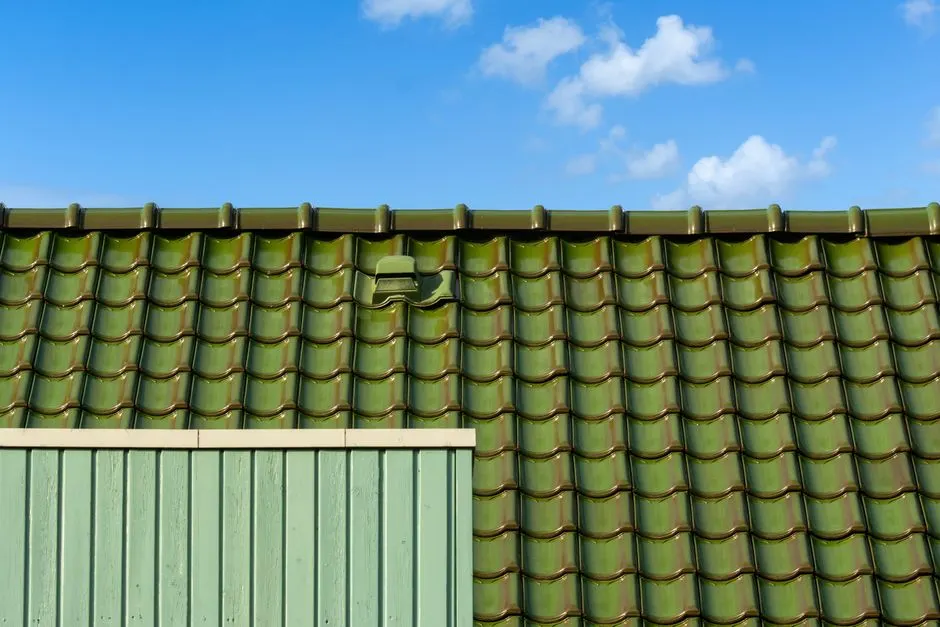
Closeup of a green tiled roof under a bright blue sky, capturing architectural detail and color contrast.
Our track record
Our track record

What we see on Cranford tile roofs

Cranford tile roof patterns

Across more than 800 Cranford tile roofs, the same failure patterns repeat. On pre-1940 homes in Cranford Center and Cranford West, the original clay tile is usually still sound at 80 to 100 years old, but the underlayment underneath is long gone. Those homes are lift-and-relay candidates, not full replacements, and we tell them so. On 1980s and 1990s concrete tile roofs in Cranford South, the tile itself is fine but fasteners have corroded and slipped tile shows up along ridges and hips. On homes near the Rahway River, we see underlayment failure five to ten years earlier than inland Cranford because of humidity. The pattern that matters most: roughly seven out of ten Cranford tile roofs we inspect do not need full replacement. They need underlayment, flashing, or ridge cap work, and we quote them that way.

800+
Cranford tile roofs serviced

Local questions

How much does Tile Roof Replacement cost in Cranford?

Typical 2026 Cranford pricing runs $18,000 to $45,000 for a full tile roof replacement, depending on size, tile type, and pitch. A lift-and-relay with new underlayment usually runs $6,000 to $14,000, and single-tile repairs run $450 to $1,200. Clay and Spanish barrel sit at the higher end. We give you a written number before we start.

Who is the best Tile Roof Replacement contractor in Cranford NJ?

The right contractor for your Cranford home is the one who inspects the deck and underlayment before quoting, holds a valid NJ Home Improvement Contractor registration, carries insurance, and offers a written warranty. We do all four, and we will show you photos of what we find on your roof before you commit to anything.

Is emergency tile roof repair available in Cranford 24/7?

Yes. We run emergency tile roof repair in Cranford 24 hours a day, seven days a week. If water is coming into your house, call 1112222333 and we will get a crew out to stop it. The first priority is tarping and stopping the water, with permanent repair scheduled once the weather clears.

Licensed and insured

Licensed, insured, and tile-trained

We hold a New Jersey Home Improvement Contractor registration, carry general liability and workers compensation insurance, and follow OSHA safety standards on every Cranford roof. Our crews are trained on tile-specific work, including NRCA installation standards and Tile Roofing Institute guidance for clay, concrete, and barrel profiles. We are a GAF Master Elite and Owens Corning Preferred Contractor, and we install CertainTeed and Boral tile products alongside Ludowici and Eagle Roofing. That matters in Cranford because the town's older homes need contractors who understand tile, not just shingles.

New Jersey Home Improvement Contractor registration
New Jersey general liability and workers compensation coverage
GAF Master Elite GAF
When To Call

Signs your Cranford tile roof needs attention

Tile roofs fail slowly and then all at once. In Cranford, the warning signs show up a season or two before the leak does, and catching them early is the difference between a repair and a replacement. If you are looking for same-day tile roof repair in Cranford, these are the things to look for before you call.

1. Cracked or slipped tile visible from the ground

A cracked tile lets water past the surface and into the underlayment. A slipped tile usually means the fastener below it has failed. Both are early warnings. One or two cracked tiles is a repair; a pattern of them across one slope points to a bigger problem underneath.

2. Granules or tile fragments in the gutter

Pieces of tile in a Cranford gutter mean the roof is shedding material. On clay tile this often means freeze-thaw damage from the past winter. If you are finding fragments after every storm, the roof is telling you the tile is at the end of its life.

3. Ceiling stains or attic moisture after rain

A stain on a Cranford ceiling almost always traces back to flashing, a valley, or a ridge cap, not the tile itself. The leak has usually been running for a while before it shows inside. Attic moisture readings confirm it before you see a stain.

4. Loose or missing ridge caps

Ridge caps take the worst of Cranford's wind and freeze-thaw cycles. When they loosen, water gets under the field tile and travels sideways. This is one of the most common and most fixable Cranford tile roof problems, and it gets expensive fast if ignored.

5. Daylight or dampness in the attic

Daylight coming through the roof deck means there is a gap somewhere, and dampness means water is already getting in. On a Cranford tile roof, this often points to failed underlayment rather than a single hole. It is worth an inspection before the next storm.

Local Problem Patterns

Common tile roof problems in Cranford

Cranford's climate and housing stock create a predictable set of tile roof problems. Freeze-thaw cycles, mature tree cover, and riverfront humidity drive most of them. Knowing what to expect on a Cranford roof makes it easier to catch problems early, and it is why we quote repairs rather than replacements whenever the tile is still good.

Failed underlayment under sound tile

Why it happens here

Cranford's freeze-thaw cycles and summer heat age the underlayment faster than the tile above it. The tile can last 75 to 100 years, but the felt and ice and water shield underneath often fail at 25 to 35 years. Once it dries out and cracks, water gets through.

Our approach

We lift the tile, replace the underlayment with new ice and water shield and felt, and relay the original tile. On most Cranford roofs this adds decades of life for a fraction of a full replacement. We check the deck while it is open and replace anything soft.

Ridge cap failure from mortar cracking

Why it happens here

Ridge caps on many Cranford roofs are set in mortar. Mortar absorbs water, freezes, and cracks. Once the bed is broken, caps loosen and wind gets under them. This is the most common cause of leaks we see on Cranford tile roofs after winter.

Our approach

We remove the failed mortar, inspect the ridge for water damage, and reset the caps. Where the tile profile allows, we mechanically fasten the caps instead of relying on mortar alone, which holds up much better through Cranford's freeze-thaw cycles.

Flashing leaks at chimneys and dormers

Why it happens here

Cranford has a lot of chimneys and dormers on older homes, and the flashing around them is often original. Step flashing corrodes, counter flashing pulls away, and sealant dries out. Water gets behind the flashing and into the roof deck.

Our approach

We replace failed flashing with new copper or metal, set it correctly into the masonry or siding, and seal it properly. We do not just caulk over old flashing, because that fails again within a season. Copper costs more up front but outlasts the roof.

Valley leaks from tree debris

Why it happens here

Cranford's mature tree canopy drops leaves, seed pods, and small branches into roof valleys every fall. The debris dams water, which backs up under the tile and into the underlayment. By the time it shows inside, the valley lining is usually compromised.

Our approach

We clear the valley, inspect the lining, and replace any failed underlayment with ice and water shield. We also recommend an annual fall cleanup on Cranford roofs with heavy tree cover, because preventing the dam is cheaper than repairing the damage it causes.

Local Pricing

What Tile Roof Replacement costs in Cranford

Typical 2026 pricing in Cranford runs from about $450 to $1,200 for a single-tile repair or flashing fix, $6,000 to $14,000 for a lift-and-relay with new underlayment, and $18,000 to $45,000 for a full tile roof replacement depending on size, tile type, and pitch. Clay and Spanish barrel sit at the higher end; concrete tile is usually lower. The biggest variable is whether the deck is sound. If we open a Cranford roof and find rotted sheathing, that adds cost, and we show you the photos before we proceed. We give you a written number up front and we stick to it unless you approve a change.

Availability in Cranford: We schedule Cranford tile work Monday through Saturday, with emergency response 24/7 for active leaks and storm damage. Standard inspections can usually be booked within two to three days. Full replacements are typically scheduled one to two weeks out, depending on the season. If you have water coming into your house right now, call and we will get a crew out to stop it.

1

Roof size and pitch

A steep Cranford Tudor roof takes longer to walk, longer to strip, and needs more harness work than a low-slope colonial. Pitch alone can move a Cranford quote by 15 to 25 percent. Square footage is the other half of that equation.

2

Tile type and profile

Clay and Spanish barrel tile cost more per square than concrete, and matching an older profile on a partial job can push the price up further. On Cranford Center homes with original tile, we try to salvage and reuse the existing tile wherever it is sound.

3

Deck and underlayment condition

If the sheathing under a Cranford tile roof is soft, it has to come out before anything new goes down. Decking replacement is the single most common surprise cost on older Cranford homes, and it is why we inspect the deck before we quote.

Year-Round Coverage

How Cranford seasons affect your tile roof

Cranford's weather drives tile roof demand in a predictable cycle. Winter freeze-thaw does the damage, spring reveals it, summer storms add to it, and fall is when we do the preventive work. Here is what to expect and what to do each season.

Spring

Spring is when Cranford homeowners find the leaks that winter caused. Freeze-thaw damage from January and February shows up as ceiling stains, cracked tile, and loose ridge caps once the rain starts. This is our busiest inspection season.

Tip

Walk your yard and look for tile fragments after the first heavy spring rain. If you find any, book an inspection before the damage spreads. Catching it in April usually means a repair, not a replacement.

Summer

Summer thunderstorms and the occasional hurricane remnant bring wind-driven rain that finds every flashing weakness on a Cranford tile roof. Heat also stresses sealants and mortar. Hail events in summer cause the small star fractures that leak months later.

Tip

After any major storm, check for slipped tile and missing ridge caps from the ground with binoculars. If you see anything missing, call. Storm damage gets worse with the next rain, and insurance claims are easier when reported promptly.

Fall

Fall is Cranford's tree-debris season. Leaves fill valleys and gutters, holding water against the underlayment. This is the season when a small valley problem becomes a leak. It is also the best time to schedule maintenance before winter.

Tip

Clear your gutters and valleys before the leaves finish falling, or book a maintenance visit. On Cranford streets with heavy tree cover, one fall cleanup prevents most of the winter leak calls we get.

Winter

Winter is when Cranford tile roofs take the most damage. Water gets into hairline cracks and mortar joints, freezes overnight, and expands. Ice dams form at eaves and push water up under the tile. By February, roofs that looked fine in October are leaking.

Tip

If you see ice dams forming at your eaves, do not chip at them. Call us. We can address the underlying ventilation and insulation issues that cause them, and we handle emergency leaks 24/7 if water is already coming inside.

Hiring Smart

Questions to ask a Cranford roofing contractor

Cranford has a lot of roofing contractors, and the difference between a good one and a bad one usually shows up two years after the job. These are the questions worth asking before you sign anything.

  1. 1

    "Are you registered as a Home Improvement Contractor in New Jersey?"

    Why it matters

    New Jersey requires roofers to hold a valid HIC registration. It is the basic proof that the contractor is operating legally and that you have recourse if something goes wrong. Ask for the registration and verify it before work starts.

  2. 2

    "Will you inspect the deck and underlayment before quoting?"

    Why it matters

    On a Cranford tile roof, the deck and underlayment are where the real problems hide. A contractor who quotes from the driveway is guessing. A contractor who opens the roof, checks the sheathing, and shows you photos is quoting the actual job.

  3. 3

    "Do you carry general liability and workers compensation insurance?"

    Why it matters

    Roof work is dangerous, and if a worker is injured on your Cranford property without workers comp coverage, you can be exposed. Ask for a certificate of insurance and confirm it is current before the crew arrives.

  4. 4

    "How will you handle it if you find rotted decking?"

    Why it matters

    On older Cranford homes, rotted sheathing is common once the tile comes off. A good contractor has a clear process for documenting it, showing you the photos, and pricing the repair before proceeding. A bad one surprises you with a change order at the end.

  5. 5

    "What warranty do you offer on labor and materials?"

    Why it matters

    Tile roofs should last decades, and the warranty should reflect that. Ask what is covered, for how long, and whether it is transferable if you sell the house. A written warranty that transfers adds real value to a Cranford home at resale.

Knowing the Area

Getting around Cranford on a roofing job

Cranford is a small town with a lot of traffic at the wrong times of day, so we plan around it. The Cranford Train Station area gets congested at commute hours, and we avoid staging material there during those windows. Nomahegan Park is a useful landmark for the eastern side of town, and the Cranford Municipal Building and Cranford Public Library anchor the center. Knowing the town means we show up when we say we will and we do not block your street.

Landmarks

  • Cranford Train Station

    The station is a scheduling landmark for us. We avoid staging dumpsters or material near it during morning and evening commute windows so we do not add to the congestion on surrounding streets.

  • Nomahegan Park

    Nomahegan Park orients our eastern Cranford work. Homes on the streets around the park have heavy tree cover, so we plan extra time for valley clearing and gutter work on those jobs.

  • Cranford Public Library

    The library sits near the center of town, which helps us route crews through Cranford Center without cutting through residential blocks unnecessarily. It is also a convenient meeting point for homeowners who want to review a quote in person.

Commercial Districts

  • Downtown Cranford

    Downtown Cranford has a mix of older commercial buildings and converted upper-floor spaces, several with flat or low-slope tile roofs. Demand here is mostly repair and maintenance rather than full replacement, and work has to be scheduled around business hours.

  • Cranford Crossing and Route 28 corridor

    The Route 28 corridor and Cranford Crossing area have larger commercial buildings and some multi-family properties with tile roofs. These jobs tend to be larger, need more staging space, and often involve coordinating with a property manager rather than a single owner.

Transport & Access

  • Cranford Train Station (NJ Transit Raritan Valley Line)

    The station is a few minutes from most of central Cranford. We route crews to avoid the station area during peak commute hours so material delivery does not sit in traffic.

  • Garden State Parkway and Route 28

    The Parkway and Route 28 give us two ways into Cranford from Linden. If one is backed up, we take the other, which keeps our arrival windows tight even on bad traffic days.

Service Area

Tile Roof Replacement Coverage Across Cranford & Union County

Routine and same-week appointments for residents and businesses across Union County, including the ZIP codes below.

7016
!

Get your Cranford tile roof looked at this week

If your Cranford tile roof is leaking, cracked, or overdue for an inspection, call us at 1112222333. We work Cranford daily, we know the housing stock from Cranford Center to Riverside, and we will tell you honestly whether you need a repair or a replacement. Emergency calls get a crew out 24/7, and standard inspections are usually booked within two to three days. One call and you will know exactly where your roof stands.

Book an inspection
Call Now: 1112222333